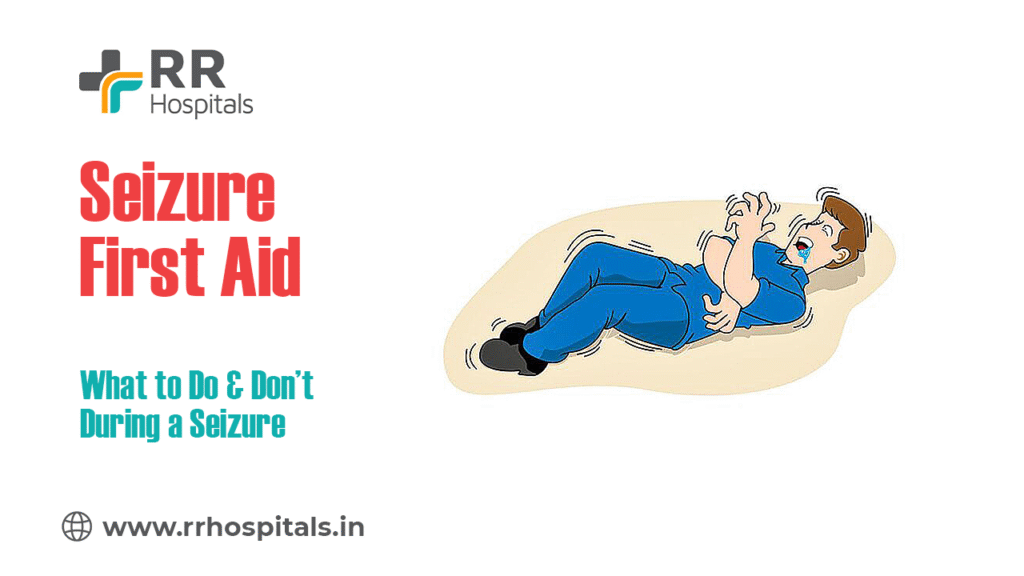
Seizure First Aid: What to Do & Don’t During a Seizure
A seizure can happen unexpectedly and can be frightening to witness. In those moments, knowing the correct seizure first aid steps can help protect the person from injury and ensure they receive timely medical care if needed.
Many people panic or act on myths—such as holding the person down or putting something in their mouth—which may do more harm than good. Understanding what to do during a seizure and what not to do during a seizure can make a meaningful difference.
This guide explains practical, evidence-based actions to take before, during, and after a seizure.
What Is a Seizure?
A seizure is a sudden burst of abnormal electrical activity in the brain that temporarily affects movement, behavior, awareness, emotions, or consciousness.
Seizures may occur due to several reasons, including:
- Epilepsy
- High fever (especially in children)
- Head injury
- Stroke
- Brain infections
- Low blood sugar
- Medication reactions
- Sleep deprivation
Not all seizures look the same. Some involve visible shaking, while others may cause staring spells, confusion, or unusual movements.
Recognizing the Signs of a Seizure
Knowing the signs helps you respond quickly.
Common symptoms include:
- Sudden loss of consciousness
- Body stiffening
- Jerking or rhythmic movements
- Blank staring
- Confusion
- Temporary inability to respond
- Unusual sensations or emotions
- Loss of bladder control
If you notice these symptoms, begin seizure first aid immediately.
What to Do During a Seizure
When someone is having a seizure, your goal is to keep them safe—not to stop the seizure.
1. Stay Calm and Observe
Remain composed and check the time. Knowing how long the seizure lasts helps healthcare providers later.
2. Protect the Person From Injury
Move nearby sharp, hard, or dangerous objects away.
Examples:
- Chairs
- Glass items
- Electrical cords
- Furniture corners
3. Gently Help Them to the Floor
If possible, guide them away from danger and help prevent falls.
4. Turn Them Onto Their Side
Once safe to do so, position them on their side.
This:
- Keeps the airway clearer
- Helps saliva drain
- Reduces choking risk
5. Loosen Tight Clothing
Loosen anything tight around:
- Neck
- Collar
- Tie
- Scarf
6. Place Something Soft Under the Head
A folded jacket or cushion can reduce injury.
7. Stay With Them
Remain until they are fully alert and aware.
These are the most important steps in first aid for seizures and can reduce complications.
What Not to Do During a Seizure
Many common reactions are unsafe.
Avoid these mistakes:
Do Not Hold Them Down
Trying to stop body movements may cause injury.
Do Not Put Anything in Their Mouth
A person cannot swallow their tongue during a seizure.
Avoid:
- Spoons
- Fingers
- Water
- Medicines
- Cloth
Do Not Force Food or Drinks
Wait until the person is fully awake.
Do Not Perform CPR During Active Seizure Movement
Most seizures stop naturally.
Do Not Crowd Around
Give the person space and airflow.
Understanding what not to do during a seizure is just as important as knowing what actions to take.
Seizure First Aid Steps After the Seizure Ends
After a seizure, recovery may take minutes to hours.
Follow these seizure first aid steps:
Check Breathing
Normal breathing usually returns naturally.
Speak Calmly
Use simple statements:
- “You had a seizure.”
- “You’re safe.”
- “I’m here.”
Allow Rest
People often feel:
- Tired
- Confused
- Sleepy
- Emotional
Check for Injuries
Look for:
- Head injuries
- Cuts
- Bruising
Offer Support
Stay nearby until awareness returns.
Good seizure management at home includes observation and reassurance during recovery.
When Is a Seizure an Emergency?
Although many seizures end on their own, emergency help is needed in certain situations.
Call emergency medical services if:
- The seizure lasts more than 5 minutes
- Another seizure starts immediately
- Breathing does not return normally
- Serious injury occurred
- It is their first seizure
- The seizure happened in water
- The person is pregnant
- The person has diabetes
- Recovery takes unusually long
These situations require urgent seizure emergency treatment.
Different Types of Seizures and First Aid Considerations
Generalized Tonic-Clonic Seizures
Often involve:
- Loss of consciousness
- Body stiffening
- Shaking movements
First aid:
- Protect from injury
- Turn on side afterward
- Monitor time
Focal Seizures
Symptoms may include:
- Confusion
- Wandering
- Repetitive movements
First aid:
- Stay nearby
- Guide gently away from danger
Absence Seizures
Signs:
- Brief staring episodes
- Quick return to normal
First aid:
- Usually observation only
Each type may require slightly different approaches, but core seizure first aid principles remain the same.
Seizure Management at Home
Families caring for someone with recurring seizures can prepare in advance.
Helpful steps include:
Create a Safety Plan
Keep emergency numbers available.
Identify Triggers
Common triggers:
- Missed medication
- Stress
- Lack of sleep
- Alcohol
- Flashing lights (for some individuals)
Maintain Medication Routine
Follow prescribed schedules consistently.
Educate Family Members
Everyone should know:
- what to do during a seizure
- when to seek medical help
Track Episodes
Record:
- Duration
- Symptoms
- Recovery time
Effective seizure management at home can improve safety and reduce anxiety.
Seizures in Children: What Parents Should Know
Watching a child experience a seizure can feel overwhelming.
Parents should:
- Stay calm
- Keep the child safe
- Avoid restraining movements
- Monitor breathing
- Contact a doctor if recommended
Children with fever-related seizures may need additional medical evaluation.
Never delay professional assessment if symptoms are unusual or severe.
Common Myths About Seizures
Myth: A Person Can Swallow Their Tongue
Fact: This is not possible.
Myth: You Must Hold the Person Still
Fact: Restraining increases injury risk.
Myth: Every Seizure Requires Emergency Care
Fact: Many resolve safely with proper observation.
Myth: Water Helps Stop a Seizure
Fact: Never give food or drinks during a seizure.
Correct knowledge improves first aid for seizures and prevents unsafe responses.
How to Support Someone Living With Seizures
Support goes beyond emergencies.
Helpful approaches:
- Learn seizure response basics
- Encourage treatment adherence
- Avoid judgment or fear
- Help identify triggers
- Build confidence in daily activities
People living with seizures often benefit from informed and supportive environments.
Frequently Asked Questions
How long do seizures usually last?
Many seizures last between 30 seconds and 2 minutes.
Can seizures stop on their own?
Yes, many seizures end naturally without intervention.
Should I wake someone after a seizure?
No. Let them rest while monitoring recovery.
Is every seizure caused by epilepsy?
No. Seizures may happen for many medical reasons.
Can someone talk during a seizure?
Some seizure types allow partial awareness and speech.
Final Thoughts
Knowing seizure first aid can help you respond quickly and safely when every second matters. The key principles are simple: protect the person from injury, avoid unsafe actions, stay calm, and monitor recovery.
Remember the essentials:
- Know what to do during a seizure
- Understand what not to do during a seizure
- Follow proper first aid for seizures
- Seek seizure emergency treatment when warning signs appear
- Practice safe seizure management at home
Being prepared can make a difficult moment safer for everyone involved.