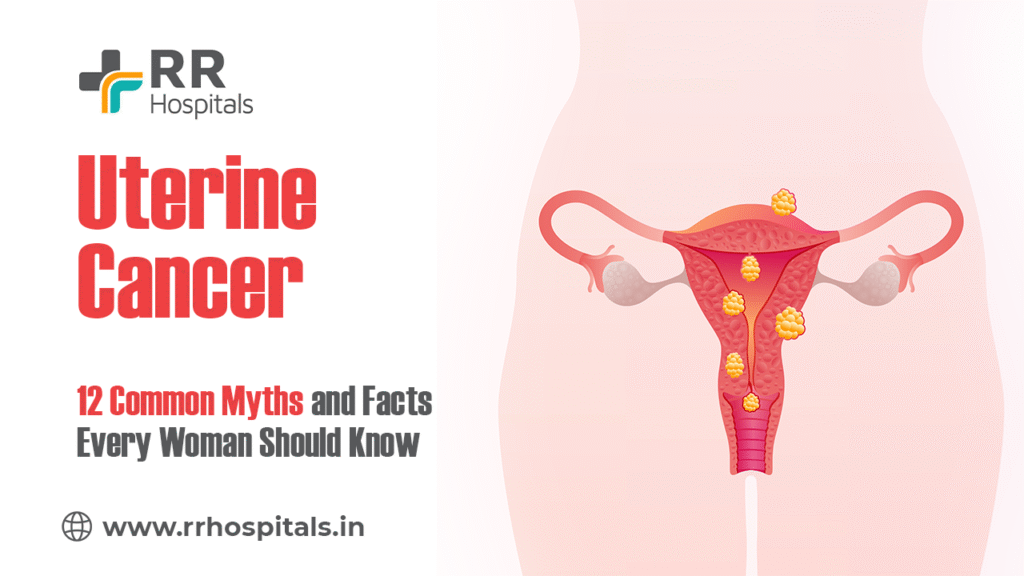
Uterine Cancer: 12 Common Myths and Facts
Uterine cancer is an important women’s health concern, yet many people have misconceptions about its symptoms, causes, and treatment. Misinformation can create unnecessary fear or cause women to overlook warning signs that need medical attention. Understanding the facts is an essential step toward making informed decisions about reproductive health.
The uterus, also called the womb, is an organ in the female reproductive system. Cancer develops when cells in the uterus begin growing uncontrollably. The most common type is endometrial cancer, which begins in the inner lining of the uterus. A less common type, uterine sarcoma, develops in the muscle or supporting tissues.
Learning about uterine cancer can help women recognize potential symptoms, understand their individual risk factors, and seek timely medical advice. In this article, we address 12 common myths and explain the facts behind them.

What Is Uterine Cancer?
Uterine cancer occurs when abnormal cells grow in the tissues of the uterus. The condition most frequently affects women who are approaching or have passed menopause, although it can also occur in younger women.
The disease may cause unusual vaginal bleeding, spotting, abnormal discharge, or pelvic discomfort. These symptoms can also result from non-cancerous conditions, so medical evaluation is important rather than assuming the cause.
Understanding the difference between myths and medical facts can help women take symptoms seriously without unnecessary panic.
Myth 1: Uterine Cancer Only Affects Older Women
Fact: Although the risk increases with age, younger women can also develop the disease.
Most cases are diagnosed in women over 50, particularly after menopause. However, age alone cannot determine whether someone will develop the condition.
Certain health conditions, hormonal factors, inherited genetic changes, and other risk factors can influence the likelihood of developing the disease. Younger women should not automatically dismiss persistent or unusual menstrual changes.
If you experience unexpected bleeding, prolonged irregular periods, or other concerning symptoms, consult a gynecologist for an appropriate assessment.
Myth 2: Uterine Cancer Always Causes Pain
Fact: Pain is not always an early symptom.
One of the most important facts about uterine cancer is that unusual vaginal bleeding may occur before noticeable pain develops. Some women experience spotting or changes in their menstrual bleeding without significant discomfort.
Pelvic pain, pressure, or discomfort may occur in some cases, but waiting for pain before seeking medical attention can delay diagnosis.
Pay attention to changes in your usual menstrual pattern and seek medical advice if bleeding occurs between periods, becomes unusually heavy, or happens after menopause.
Myth 3: Abnormal Vaginal Bleeding Always Means Cancer
Fact: Abnormal bleeding can have several causes, but it should not be ignored.
Hormonal changes, fibroids, polyps, infections, and other gynecological conditions can cause irregular bleeding. Cancer is only one possible explanation.
However, unexpected bleeding can be an important warning sign, especially after menopause. A healthcare professional may recommend an examination, ultrasound, or endometrial biopsy to determine the cause.
Do not assume that unusual bleeding is harmless, particularly if it is new, persistent, or occurs after your periods have stopped.
Myth 4: Uterine Cancer Symptoms Are Always Easy to Recognize
Fact: Some symptoms are subtle, and early disease may not cause obvious discomfort.
Common uterine cancer symptoms include:
- Vaginal bleeding between menstrual periods
- Menstrual bleeding that is heavier or lasts longer than usual
- Bleeding or spotting after menopause
- Unusual vaginal discharge
- Persistent pelvic pain or pressure
Some symptoms may resemble those of common gynecological conditions. Their presence does not automatically mean cancer, but they deserve appropriate medical assessment.
Recognizing changes early and communicating them clearly to your doctor can help identify the underlying cause.
Myth 5: Uterine Cancer Is Always Hereditary
Fact: Most cases are not caused by a known inherited genetic condition.
A family history of uterine or colorectal cancer can increase concern about inherited conditions such as Lynch syndrome. This syndrome raises the risk of several cancers, including endometrial cancer.
However, many people diagnosed with the disease do not have a strong family history. Other factors, including age, obesity, hormonal exposure, and certain medical conditions, can contribute to risk.
If several close relatives have had related cancers, discuss your family history with a healthcare professional. Genetic counselling or testing may be appropriate in selected cases.
Myth 6: Uterine Cancer Risk Factors Are the Same for Every Woman
Fact: Risk varies depending on a person’s health, medical history, and hormonal factors.
Important uterine cancer risk factors include increasing age, obesity, type 2 diabetes, and exposure to estrogen without adequate progesterone in certain circumstances.
Other factors may include taking tamoxifen, having a history of conditions associated with irregular ovulation, and having certain inherited genetic syndromes.
Having one or more risk factors does not mean cancer will definitely develop. Likewise, women without obvious risk factors can still be diagnosed.
Understanding your personal health history helps your doctor determine whether further assessment or specialist advice is appropriate.
Myth 7: A Pap Test Can Detect All Uterine Cancers
Fact: A Pap test is primarily used to screen for cervical cancer, not uterine cancer.
This is an important distinction because the cervix and the uterus are different anatomical structures.
There is currently no recommended routine screening test for uterine cancer in women at average risk who have no symptoms. When symptoms occur, doctors may recommend a transvaginal ultrasound, an endometrial biopsy, or other investigations depending on the circumstances.
Women with unusual vaginal bleeding should not rely on a normal Pap test to rule out uterine cancer. Appropriate diagnostic evaluation is necessary when symptoms suggest a possible problem.
Myth 8: Uterine Cancer Cannot Be Treated Successfully
Fact: Many cases, particularly those detected at an early stage, can be treated successfully.
The outlook depends on the cancer type, stage, tumour characteristics, and the person’s overall health. Early-stage endometrial cancer often has a more favourable outlook than disease that has spread to distant parts of the body.
Recognizing symptoms and seeking timely assessment can help avoid unnecessary delays in diagnosis.
Although no treatment can guarantee the same result for every patient, advances in surgery, radiation therapy, systemic medicines, and personalized treatment planning have expanded the available options.
Myth 9: Surgery Is the Only Uterine Cancer Treatment Option
Fact: Treatment depends on the cancer’s type, stage, and individual characteristics.
Common uterine cancer treatment options include:
- Surgery: Often the main treatment for endometrial cancer that has not spread extensively. It may involve removing the uterus and, when appropriate, other reproductive organs or lymph nodes.
- Radiation therapy: Uses targeted radiation to destroy cancer cells and may be recommended after surgery or in other situations.
- Chemotherapy: Uses medicines to kill or control cancer cells, particularly in certain higher-risk or advanced cancers.
- Hormone therapy: May be suitable for selected hormone-sensitive cancers or specific patients.
- Targeted therapy or immunotherapy: May be considered for particular tumour characteristics or disease settings.
Not every patient needs every treatment. A gynecologic oncologist can explain the potential benefits, risks, and alternatives of the recommended approach.
Myth 10: Uterine Cancer Can Always Be Prevented
Fact: There is no guaranteed way to prevent every case.
Some lifestyle and medical factors can influence risk, but prevention is not completely possible. Maintaining a healthy weight, engaging in regular physical activity, and managing conditions such as diabetes may help reduce risk for some women.
Hormonal medicines can influence risk in different ways, so they should never be started solely for cancer prevention without medical advice.
It is also important to understand that a healthy lifestyle cannot eliminate all cancer risk. Women should remain aware of symptoms and discuss personal risk factors with their healthcare provider.
Myth 11: Uterine Cancer Means a Woman Cannot Have Children
Fact: Fertility outcomes depend on the patient’s age, cancer type, stage, and treatment plan.
Some treatments, particularly removal of the uterus, permanently prevent carrying a pregnancy. However, selected patients with carefully assessed, early-stage endometrial cancer may be eligible for fertility-sparing treatment under specialist supervision.
Such approaches are not suitable for everyone and require close monitoring to evaluate treatment response and detect recurrence.
Women who wish to preserve their fertility should discuss this goal with a gynecologic oncologist before treatment begins. A specialist can explain the safest available options without compromising necessary cancer care.
Myth 12: There Is No Need to See a Doctor If Symptoms Disappear
Fact: Symptoms that improve temporarily may still require medical evaluation.
Bleeding can fluctuate naturally or because of non-cancerous conditions. However, temporary improvement does not always establish the underlying cause.
Postmenopausal bleeding should always be evaluated, even if it occurs only once. Women who experience persistent or recurring abnormal bleeding should also seek medical advice.
If you have already been advised to undergo further testing, do not cancel it simply because the symptoms have stopped. Following through with recommended investigations can help clarify whether treatment or monitoring is necessary.
Can Uterine Cancer Be Cured?
Can uterine cancer be cured? In many cases, especially when endometrial cancer is diagnosed early, treatment can be successful. However, the outcome differs between individuals.
Doctors consider the cancer’s stage, grade, cell type, molecular characteristics, and whether it has spread beyond the uterus when estimating prognosis and selecting treatment.
Follow-up appointments are also important after treatment. They allow the medical team to monitor recovery, manage side effects, and assess any new symptoms.
If you or a family member has received a diagnosis, ask the treating specialist to explain the stage, available treatments, expected outcomes, and follow-up schedule.
When Should You Consult a Doctor?
Seek medical evaluation if you notice unexpected vaginal bleeding, spotting after menopause, unusual vaginal discharge, or persistent pelvic discomfort.
A doctor may ask about your menstrual history, medications, family history, and other health conditions. Depending on the findings, investigations may include a pelvic examination, transvaginal ultrasound, or endometrial biopsy.
Seek prompt medical advice for any bleeding after menopause. If bleeding is heavy and accompanied by fainting, severe weakness, or other signs of significant blood loss, seek urgent medical care.
Remember that these symptoms do not automatically indicate cancer. Their purpose is to alert you that a professional assessment may be needed.
Frequently Asked Questions
1. What are the early symptoms of uterine cancer?
Unusual vaginal bleeding is the most common warning sign of endometrial cancer. It may include bleeding between periods, unusually heavy periods, or spotting after menopause.
2. Can uterine cancer occur before menopause?
Yes. Although it is more common in older women, it can occur before menopause. Persistent or unexplained abnormal bleeding should be evaluated at any age.
3. Is uterine cancer the same as cervical cancer?
No. Uterine cancer develops in the uterus, while cervical cancer begins in the cervix. They differ in causes, diagnosis, and prevention strategies.
4. Does every woman need routine uterine cancer screening?
There is no recommended routine screening test for asymptomatic women at average risk. Women with symptoms or certain inherited risk factors may need specific diagnostic tests or specialist monitoring.
5. How can women reduce their risk?
Maintaining a healthy weight, staying physically active, managing relevant medical conditions, and discussing personal risk factors with a doctor may help lower risk. These steps cannot prevent every case.
Conclusion
Understanding the facts behind common misconceptions is an important part of women’s health awareness. Uterine cancer can affect women at different ages, and its symptoms should never be dismissed simply because they are painless, temporary, or uncommon.
Learning about risk factors, recognizing unusual bleeding, and seeking appropriate medical assessment can help women make informed decisions. Although the diagnosis can be worrying, treatment options are available, and many early-stage cases have favourable outcomes.
If you notice persistent abnormal bleeding or any bleeding after menopause, consult a qualified healthcare professional. Timely assessment, accurate diagnosis, and an individualized treatment plan are essential steps toward better care.