Gynecomastia vs Chest Fat: How to Know the Difference?
Many men struggle with excess chest fullness at some point in their lives. But one of the biggest questions people ask is whether they are dealing with gynecomastia vs chest fat. At first glance, both conditions may look similar, but they are very different in terms of causes, structure, and treatment.
Understanding the difference between male chest fat vs gynecomastia is essential because the wrong assumption can lead to ineffective treatments and frustration. This guide will help you clearly identify what you’re dealing with and what steps you should take next.
What Is Gynecomastia?
Gynecomastia is a medical condition characterized by the enlargement of glandular breast tissue in males. It is usually caused by a hormonal imbalance—specifically, an increase in estrogen levels or a decrease in testosterone.
This condition can affect one or both sides of the chest and may sometimes cause tenderness or sensitivity. It is common during puberty, but it can also occur in adult men due to various factors.
Common Causes of Gynecomastia
- Hormonal imbalance
- Puberty-related changes
- Aging
- Use of certain medications
- Steroid or supplement use
- Underlying health conditions
Understanding these gynecomastia symptoms in men can help you identify whether your condition is more than just fat.
What Is Chest Fat?
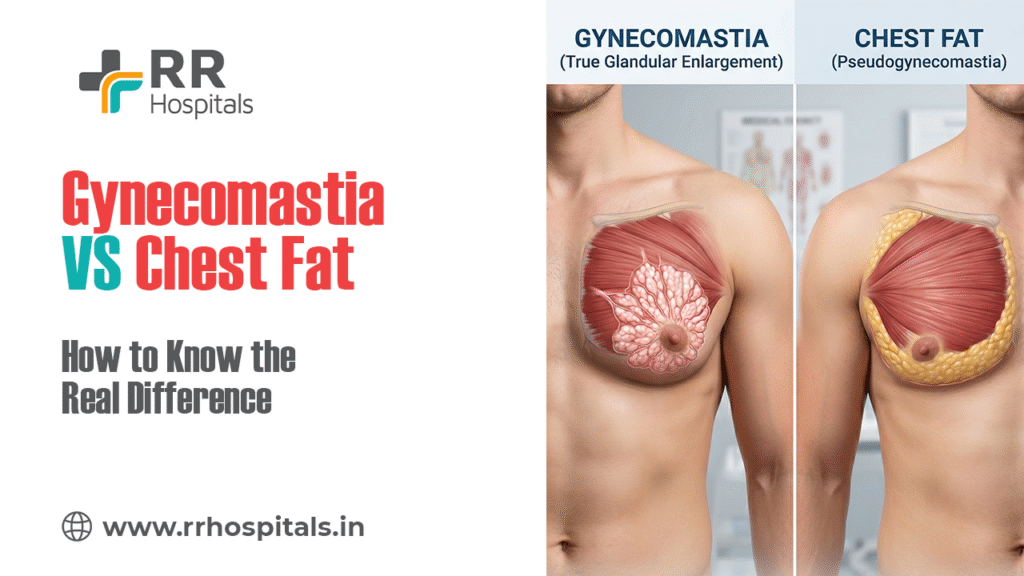
Chest fat, often referred to as pseudogynecomastia, is simply the accumulation of fat in the chest area. Unlike gynecomastia, it does not involve glandular tissue.
This condition is typically linked to overall body fat and lifestyle factors such as poor diet, lack of exercise, and sedentary habits.
Common Causes of Chest Fat
- Weight gain
- High-calorie diet
- Lack of physical activity
- Genetics
- Poor metabolism
When comparing pseudogynecomastia vs gynecomastia, the key difference lies in the type of tissue involved—fat vs gland.
Key Differences: Gynecomastia vs Chest Fat
Let’s break down the major differences between these two conditions so you can better understand gynecomastia vs chest fat.
1. Type of Tissue
- Gynecomastia: Firm glandular tissue under the nipple
- Chest Fat: Soft, fatty tissue spread across the chest
2. Feel and Texture
- Gynecomastia often feels like a rubbery or firm lump beneath the nipple
- Chest fat feels soft and movable, similar to fat in other body areas
3. Appearance
- Gynecomastia may cause a pointed or puffy nipple appearance
- Chest fat usually creates a more uniform, sagging chest look
4. Pain or Sensitivity
- Gynecomastia may cause tenderness or discomfort
- Chest fat is typically painless
5. Response to Exercise
- Gynecomastia does not significantly improve with exercise
- Chest fat can reduce with weight loss and workouts
These differences are crucial when evaluating is it gynecomastia or fat.
How to Identify Gynecomastia at Home
While a medical diagnosis is always recommended, there are some basic ways to understand how to identify gynecomastia at home.
Simple Self-Check Method
- Stand in front of a mirror and observe your chest
- Gently press around the nipple area
- Check for a firm, disc-like lump beneath the nipple
If you feel a solid mass, it may indicate gynecomastia. If the tissue feels soft and spreads evenly, it’s more likely chest fat.
However, self-checks are not always accurate, so professional consultation is important for proper gynecomastia diagnosis.
When It’s Both: Mixed Cases
In many cases, men may have a combination of both conditions. This means they have glandular tissue along with excess fat.
This can make male chest fat vs gynecomastia harder to distinguish visually. Even if you lose weight, the chest may not flatten completely due to the presence of glandular tissue.
That’s why understanding the root cause is critical before choosing a treatment plan.
Diagnosis: What Doctors Look For
A doctor will typically use a combination of methods for accurate gynecomastia diagnosis:
- Physical examination
- Medical history review
- Hormone level tests
- Imaging (like ultrasound, if needed)
These steps help determine whether the issue is glandular, fatty, or a mix of both.
Treatment Options: What Actually Works?
Treatment depends entirely on whether you’re dealing with gynecomastia or chest fat.
For Chest Fat
If your condition is related to fat, lifestyle changes are highly effective:
- Regular exercise (cardio + strength training)
- Balanced diet
- Calorie deficit
- Consistency in fitness routine
This is the best approach for how to reduce chest fat male.
For Gynecomastia
For true gynecomastia, treatment options include:
- Hormonal therapy (in early stages)
- Medication adjustment (if caused by drugs)
- Surgery for long-term or severe cases
When it comes to gynecomastia treatment, surgery is often the most effective solution for permanent results
Common Mistakes People Make
Understanding gynecomastia vs chest fat can help you avoid these common mistakes:
- Assuming all chest enlargement is fat
- Spending months in the gym without results
- Ignoring symptoms like pain or lumps
- Trying random supplements without diagnosis
These mistakes can delay proper treatment and lead to frustration.
Psychological Impact
Both gynecomastia and chest fat can affect confidence and body image. Many men feel uncomfortable wearing fitted clothes or participating in activities like swimming.
Addressing the issue—whether through fitness or medical treatment—can significantly improve self-esteem and quality of life.
When Should You See a Doctor?
You should consult a doctor if:
- You feel a lump under the nipple
- There is pain or tenderness
- The condition persists despite weight loss
- One side is significantly larger than the other
Early diagnosis can help you take the right steps without wasting time on ineffective solutions.
Final Thoughts
Understanding the difference between gynecomastia vs chest fat is the first step toward effective treatment. While both conditions may look similar, their causes and solutions are very different.
To recap:
- Gynecomastia involves glandular tissue and often requires medical treatment
- Chest fat is related to overall body fat and can be reduced with lifestyle changes
- Proper diagnosis is key to choosing the right approach
If you’re unsure whether you’re dealing with pseudogynecomastia vs gynecomastia, don’t rely on guesswork. A professional evaluation can save you time, effort, and confusion.