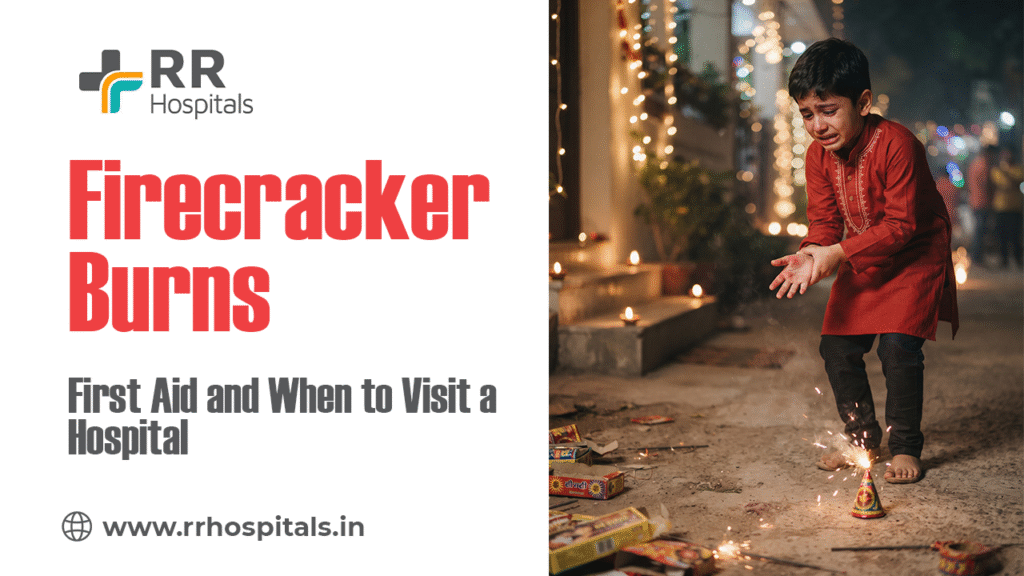
Firecracker Burns: First Aid and When to Visit a Hospital
Festivals like Diwali bring families together through celebrations, lights, and fireworks. However, firecrackers, sparklers, and other fireworks can cause accidental burn injuries, particularly when safety precautions are overlooked. A moment of carelessness can result in painful skin damage, blisters, eye injuries, or even severe burns that require hospital treatment.
Firecracker burns occur when the skin or underlying tissues come into contact with flames, sparks, hot particles, or explosive materials. Depending on the intensity of exposure, these injuries can range from minor superficial burns to deep tissue damage.
Knowing the right first aid for firecracker burns is essential to reduce further skin damage and prevent complications. Understanding which injuries require immediate hospital care can also make an important difference in recovery.

What Are Firecracker Burns?
Firecracker burns are thermal injuries caused by the heat, flames, sparks, or hot debris produced by fireworks and explosive devices.
These injuries commonly affect the hands, fingers, face, arms, legs, and eyes because these areas are more likely to be exposed while lighting or handling fireworks.
The severity of a firecracker burn depends on factors such as:
- The type and intensity of the firecracker.
- The distance between the person and the explosion.
- The duration of heat exposure.
- The area of the body affected.
- The depth of skin and tissue damage.
- Whether additional injuries, such as eye damage or inhalation of smoke, have occurred.
Some injuries may appear minor initially but can become more noticeable as swelling, blistering, and tissue damage develop.
5 Common Symptoms of Firecracker Burns
Recognising the symptoms of a firecracker burn can help you understand the severity of the injury and decide when medical attention is necessary.
1. Redness and Skin Irritation
Mild burns may cause redness, tenderness, and a warm sensation in the affected area. The skin may become sensitive to touch and appear inflamed.
Although these symptoms can occur with superficial burns, persistent or worsening redness should be medically assessed.
2. Blisters on the Skin
Blisters are common in partial-thickness burns, where damage extends beyond the outermost layer of the skin.
They may contain clear fluid and can be painful or sensitive. Do not puncture or remove blisters yourself, as doing so can increase the risk of infection.
3. Severe Pain and Swelling
Firecracker burns may cause significant pain, tenderness, and swelling. The discomfort can make it difficult to move the affected fingers, hands, or other body parts.
Severe pain, rapidly increasing swelling, or restricted movement requires prompt medical evaluation.
4. Peeling, White, or Charred Skin
More serious burns may cause the skin to appear white, pale, brown, or charred. The affected area may look dry, leathery, or damaged.
Interestingly, deep burns can sometimes cause reduced sensation because nerve endings have been damaged. Therefore, the absence of severe pain does not necessarily mean the injury is minor.
5. Eye Irritation or Vision Problems
Firecracker explosions can release sparks and small particles that may injure the eyes.
Symptoms can include:
- Eye redness and watering.
- Burning or irritation.
- Pain or sensitivity to light.
- Blurred or reduced vision.
- Difficulty opening the affected eye.
Eye injuries caused by fireworks require urgent medical assessment, especially when vision changes or penetrating injuries are suspected.
First Aid for Firecracker Burns: 6 Essential Steps
Taking the right action immediately after a firecracker injury can help limit further damage. Follow these first-aid steps while arranging medical care when necessary.
Step 1: Move Away From the Firecracker
Make sure the injured person is away from the fire, sparks, and unexploded fireworks. Do not attempt to handle or relight a damaged firecracker.
If clothing catches fire, extinguish the flames using water or by smothering them with a suitable blanket. If safe, help the person stop, drop, and roll.
Step 2: Cool the Burn Under Running Water
<text> </text>
<badge color=”success”>Important first-aid step</badge>
Place the burned area under cool running tap water for 20 minutes as soon as possible.
Cooling helps remove residual heat, reduce pain, and limit further tissue damage. It is best started immediately, but cooling can still be beneficial when started within approximately three hours of the injury.
Remember:
- Use cool running water, not ice.
- Avoid applying very cold water over large areas of the body.
- Keep the rest of the person warm, especially children.
- Do not delay emergency medical assistance for a serious injury.
Step 3: Remove Jewellery and Tight Accessories
Carefully remove rings, watches, bangles, and other tight accessories near the injured area before swelling develops.
If clothing or jewellery is stuck to the burned skin, do not pull it away. Leave it for medical professionals to manage.
Step 4: Cover the Burned Area
After cooling, loosely cover the injury with a clean, non-fluffy, non-stick dressing or clean cloth.
A suitable temporary covering can protect the wound from dirt and reduce irritation while the person is taken for medical care.
Avoid tightly wrapping the burned area because swelling may develop.
Step 5: Avoid Home Remedies
Do not apply toothpaste, butter, cooking oil, turmeric, ice, or other household substances to the burn.
These remedies do not provide appropriate burn treatment and may interfere with wound assessment or increase the risk of complications.
Never break blisters or attempt to remove damaged skin.
Step 6: Seek Medical Attention
If the burn is deep, extensive, painful, or involves sensitive areas such as the face, hands, feet, or genitals, arrange prompt hospital evaluation.
Do not wait for symptoms to worsen before seeking help.
When Should You Visit a Hospital for Firecracker Burns?
Not every burn has the same severity. While some minor superficial injuries may heal with appropriate care, other burns require professional assessment, specialised dressings, or surgical treatment.
Visit a hospital immediately if you notice any of the following:
1. Deep or Extensive Burns
Burns that appear white, brown, leathery, or charred may indicate deeper tissue damage.
Large burns can also cause fluid loss and other serious complications. These injuries require emergency medical evaluation.
2. Burns on the Face, Hands, or Feet
Burn injuries involving the face, hands, fingers, feet, or genitals need prompt assessment because these areas are particularly important for everyday functioning.
Burns around joints may also affect movement and require careful treatment.
3. Severe Pain, Swelling, or Restricted Movement
If swelling increases rapidly, pain becomes severe, or the injured person cannot move the affected body part normally, seek medical attention.
Deep burns may affect muscles, tendons, nerves, or circulation.
4. Eye Injuries
Any suspected eye injury caused by fireworks should be assessed urgently.
Do not rub the eye, apply pressure, or attempt to remove an embedded object. If there is an obvious penetrating injury, avoid rinsing or manipulating the eye and seek emergency care immediately.
5. Signs of Smoke Inhalation
Firecracker smoke can irritate the respiratory system, particularly in crowded or poorly ventilated areas.
Watch for:
- Persistent coughing.
- Difficulty breathing.
- Chest discomfort.
- Hoarseness.
- Soot around the nose or mouth.
Breathing difficulties following smoke exposure require emergency medical assistance.
6. Burns in Children
Children have more delicate skin and may be more vulnerable to burn injuries. Even seemingly small injuries should be assessed carefully.
Seek medical advice promptly for a child with a firecracker burn, particularly when blisters, severe pain, facial injuries, or extensive skin damage are present.
How Are Firecracker Burns Treated in a Hospital?
Treatment depends on the depth, location, and extent of the burn. The doctor will assess the injury and recommend an appropriate treatment plan.
1. Initial Burn Assessment
The medical team examines the affected skin and evaluates the depth and extent of the injury.
Doctors also assess pain, swelling, circulation, and possible damage to deeper tissues. Associated injuries, including eye injuries and fractures, may require additional evaluation.
2. Cleaning and Wound Dressing
The burned area may be carefully cleaned to remove dirt and loose damaged tissue.
Depending on the wound, the doctor may recommend specialised burn dressings that protect the skin, maintain an appropriate healing environment, and reduce infection risk.
3. Pain Management
Burn injuries can cause considerable discomfort. Doctors may recommend suitable pain-relief medication based on the severity of the injury and the patient’s medical condition.
4. Infection Prevention
Damaged skin loses part of its natural protective barrier, increasing the possibility of infection.
Medical professionals monitor the wound for signs such as increasing redness, swelling, discharge, worsening pain, and fever. Antibiotics are prescribed when clinically indicated rather than automatically for every burn.
Tetanus immunisation status may also be reviewed.
5. Skin Grafting and Surgical Treatment
Deep burns may not heal adequately on their own and can require surgical treatment.
Depending on the injury, procedures may include:
- Removal of dead or damaged tissue.
- Skin grafting to cover areas with significant skin loss.
- Reconstructive procedures for injuries affecting important functional areas.
- Scar management and rehabilitation.
The decision to perform surgery depends on the depth of tissue damage and the patient’s recovery.
6. Follow-Up and Rehabilitation
Recovery does not end when the wound begins to heal. Follow-up visits help doctors monitor healing, identify complications, and manage scars.
Physiotherapy may be recommended when burns affect the hands, fingers, joints, or other areas involved in movement.
Some patients with extensive injuries may also benefit from rehabilitation and psychological support.
Common Mistakes to Avoid After a Firecracker Burn
Incorrect first aid can worsen an injury or delay proper treatment. Avoid these common mistakes:
| Common mistake | What you should do instead |
| Applying toothpaste or oil | Cool the burn under running water |
| Using ice directly | Use cool tap water for 20 minutes |
| Breaking blisters | Leave blisters intact |
| Pulling off stuck clothing | Leave it for medical professionals |
| Applying turmeric or home remedies | Use a clean, appropriate temporary covering |
| Ignoring small-looking burns | Seek assessment when the injury is concerning |
| Delaying treatment for eye injuries | Get urgent medical evaluation |
How to Prevent Firecracker Burn Injuries During Festivals
Prevention is always better than treatment. Following basic safety precautions can reduce the risk of accidents during Diwali and other celebrations.
- Purchase fireworks only from authorised sellers.
- Light firecrackers in open spaces away from buildings and vehicles.
- Keep a safe distance after lighting fireworks.
- Never hold explosive firecrackers in your hands.
- Use a long lighting stick instead of bringing your face close to the fuse.
- Keep children under responsible adult supervision.
- Avoid wearing loose, highly flammable clothing.
- Keep water and a suitable fire extinguisher nearby.
- Never attempt to relight a firecracker that has failed to explode.
- Avoid lighting fireworks near petrol, gas cylinders, or other flammable materials.
- Keep pets and young children away from fireworks.
These precautions can help make festival celebrations safer for everyone.
Frequently Asked Questions About Firecracker Burns
1. What should I do immediately after a firecracker burn?
Move away from the source of injury and cool the affected area under cool running water for 20 minutes. Remove nearby jewellery if it is not stuck to the skin, cover the burn loosely with a clean dressing, and seek medical attention when necessary.
2. Can I apply toothpaste or turmeric to a firecracker burn?
No. Toothpaste, turmeric, butter, oil, and other household remedies should not be applied to a burn. Use cool running water for initial cooling and seek appropriate medical advice.
3. How do I know if a firecracker burn is serious?
Deep or charred skin, large blisters, severe pain, increasing swelling, eye injuries, and breathing difficulties are warning signs. Burns involving the face, hands, feet, or genitals also require prompt medical evaluation.
4. Do firecracker burns leave permanent scars?
Some superficial burns heal without permanent scarring, while deeper injuries may leave scars or changes in skin colour. The possibility of scarring depends on the depth of the burn, wound healing, and treatment.
5. Should I take a child to the hospital after a firecracker burn?
Yes, children with firecracker burns should receive prompt medical advice. The need for hospital treatment depends on the injury’s depth, size, location, and symptoms. Do not delay assessment for burns involving the face, hands, eyes, or other sensitive areas.
6. Can a small firecracker burn cause serious damage?
Yes. A small-looking burn can sometimes be deeper than it appears, particularly when the skin is white, charred, or numb. The appearance of the wound alone cannot always determine its severity.
7. How long does a firecracker burn take to heal?
Healing time depends on the depth and extent of the injury. Superficial burns may heal within days, while deeper burns can take several weeks or longer and may require specialised treatment or surgery.
Conclusion
Firecracker burns can range from minor skin injuries to serious conditions involving deep tissue damage, eye injuries, and other complications. Knowing the correct first-aid steps and recognising when hospital treatment is necessary can make a significant difference in managing these injuries.
Remember to cool the burned area under running water for 20 minutes, avoid harmful home remedies, and never ignore deep or extensive burns.
If you or a family member experiences a firecracker injury, seek timely medical assessment rather than waiting for the symptoms to worsen.
Celebrate safely, take precautions, and prioritise your family’s health.
Medical Disclaimer: This article is intended for general educational purposes and does not replace professional medical advice, diagnosis, or treatment. Serious burns, eye injuries, and breathing difficulties require urgent medical attention.