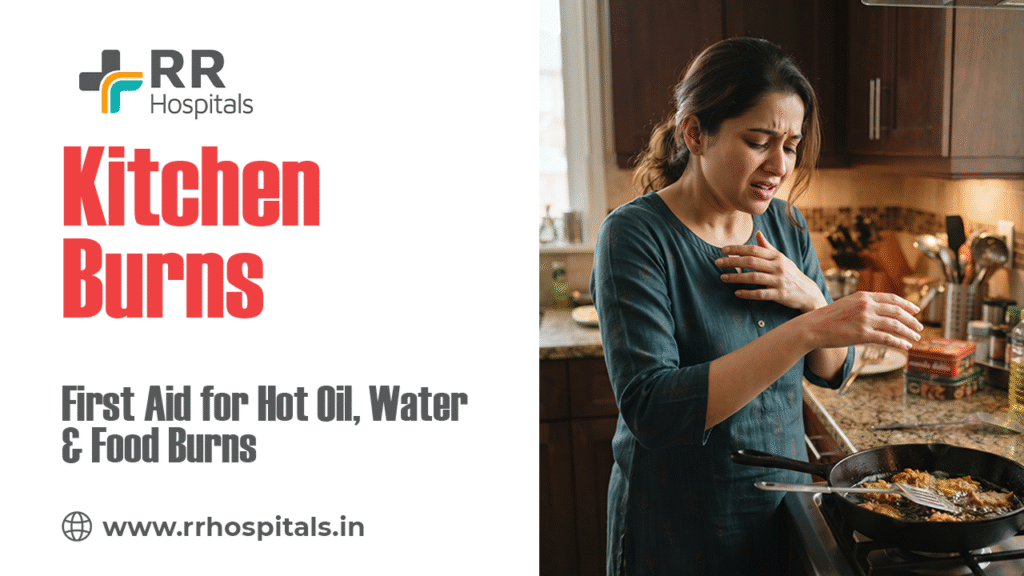
Kitchen Burns: How to Treat Hot Oil, Water, and Food Burns
Kitchen accidents can happen in seconds. A splash of hot cooking oil, boiling water, spilled dal, hot milk, or freshly cooked food can cause painful skin injuries. These incidents are common during everyday cooking, especially when handling hot utensils, frying food, or preparing meals in a hurry.
Although some kitchen burns are minor, others can damage deeper layers of the skin and may require medical attention. Knowing the correct first aid steps can help reduce further injury and prevent complications.
This guide explains the common types of kitchen burns, how to treat hot oil, hot water, and food burns, what mistakes to avoid, and when to visit a hospital.
What Are Kitchen Burns?
Kitchen burns are skin injuries caused by contact with hot liquids, steam, cooking oil, heated utensils, or hot food. They are generally classified as thermal burns because they occur due to exposure to heat.
The severity depends on factors such as the temperature of the substance, how long it touches the skin, the affected body area, and how deeply the skin is injured.
Common causes include:
- Hot oil splashing while frying or cooking.
- Boiling water spilling from a vessel or kettle.
- Hot milk, tea, coffee, or soup falling onto the skin.
- Spilled hot dal, curry, or other freshly cooked food.
- Touching hot pans, pressure cookers, or cooking equipment.
- Steam escaping from pressure cookers or boiling vessels.
Types of Kitchen Burns
Different kitchen accidents can cause different patterns of burn injuries.
1. Hot Oil Burns
Hot oil burns can occur when cooking oil splashes from a frying pan, kadai, or deep-frying vessel. Since cooking oil can reach high temperatures, contact with it may cause significant skin damage.
Common signs include:
- Redness and intense pain.
- Swelling around the affected area.
- Blister formation.
- Peeling or damaged skin in more serious cases.
Hot oil burns should not be judged only by the size of the affected area. A small-looking injury can still be deep and may need medical assessment.
2. Hot Water Burns
Hot water burns, also known as scalds, happen when boiling or very hot water spills onto the skin. They commonly affect the hands, arms, legs, feet, and abdomen.
Symptoms may include:
- Red and painful skin.
- Swelling.
- Blisters.
- Skin that appears wet or damaged in more severe burns.
Children and older adults may be particularly vulnerable because their skin can be more easily injured or their ability to move away from hot liquids may be limited.
3. Hot Food Burns
Hot food burns can happen when freshly prepared dishes such as dal, curry, soup, rice, or porridge spill onto the skin.
Thick or sticky foods may remain in contact with the skin for longer, increasing the risk of injury. Hot food can also become trapped between clothing and skin, making the burn worse.
If hot food spills onto someone, carefully remove clothing near the affected area only if it is not stuck to the skin. Cool the injury under running water.
4. Steam Burns
Steam from boiling water, pressure cookers, and cooking vessels can cause burns even without direct contact with a hot liquid. Steam can injure exposed skin, particularly the face, hands, and arms.
A steam burn should receive the same immediate cooling and appropriate medical assessment as other thermal burns.
How to Treat a Kitchen Burn Immediately
The first few minutes after a burn are important. The priority is to stop the heat exposure and cool the affected skin.
Follow these first aid steps:
Step 1: Move Away From the Heat Source
Stop cooking and move away from the hot oil, boiling water, steam, or heated utensil. Make sure the surroundings are safe before helping the injured person.
If clothing catches fire, stop, drop, and roll to extinguish the flames. Do not run, as this can make the flames spread.
Step 2: Cool the Burn Under Running Water
Place the affected area under cool running tap water for 20 minutes.
Cooling helps remove residual heat from the skin and can limit further tissue damage. Start as soon as possible after the injury.
Avoid using ice or ice-cold water because extreme cold can cause additional skin damage.
If the burn is extensive, cool the injured area while keeping the rest of the person’s body warm. This is especially important for children and older adults.
Step 3: Remove Jewellery and Loose Clothing
Carefully remove rings, bangles, watches, or other tight items near the injured area before swelling develops.
Remove loose clothing near the burn if it can be taken off easily. Do not pull away clothing or material stuck to the burnt skin. This may cause further injury.
Step 4: Cover the Burn Loosely
After cooling, cover the area with a clean, non-fluffy cloth or an appropriate sterile, non-stick dressing.
Do not wrap the dressing tightly around the injured area. Avoid applying adhesive dressings directly over the burn.
For a serious burn, seek medical care promptly rather than delaying treatment to arrange a dressing.
Step 5: Seek Medical Assessment When Needed
Visit a hospital if the burn is large, deep, blistering significantly, extremely painful, or located on a sensitive area such as the face, hands, feet, or genitals.
Do not wait for symptoms to worsen before seeking help if the injury appears serious.
What Should You Avoid Applying to a Kitchen Burn?
Many people try home remedies immediately after a kitchen accident. However, some common household substances can contaminate the wound, irritate the skin, or delay proper treatment.
Avoid applying:
- Toothpaste: It does not treat burns and may contaminate the injured skin.
- Butter or ghee: Greasy substances can retain heat and interfere with assessment.
- Cooking oil: Applying oil to a burn does not cool or heal the injury.
- Turmeric or powders: These can contaminate the wound.
- Ice: Direct ice application can cause additional tissue damage.
- Creams or ointments: Avoid applying them as an immediate first aid measure unless a healthcare professional advises you to do so.
Do not burst blisters. They help protect the underlying skin, and breaking them can increase the risk of infection.
How to Identify the Severity of a Kitchen Burn
Burns are commonly described according to how deeply they affect the skin.
Superficial Burns
These affect the outermost layer of the skin.
Possible symptoms:
- Redness.
- Mild swelling.
- Pain or tenderness.
- No significant blistering.
Minor superficial burns may improve with appropriate first aid and care. However, seek medical advice if symptoms are severe or the injury does not improve.
Partial-Thickness Burns
These affect the outer skin and part of the layer beneath it.
Possible symptoms:
- Blisters.
- Significant pain.
- Swelling.
- Moist or shiny-looking skin.
These burns may require medical assessment, wound cleaning, and suitable dressings.
Full-Thickness Burns
These damage the full thickness of the skin and may extend into deeper tissues.
Possible signs:
- White, brown, black, or charred-looking skin.
- Dry or leathery texture.
- Reduced sensation in the injured area in some cases.
A serious burn may not always be extremely painful because deeper tissue and nerve endings can be damaged. Any suspected deep burn requires urgent hospital treatment.
When Should You Visit a Hospital for a Kitchen Burn?
Not every minor burn requires emergency treatment, but certain injuries should never be ignored.
Seek urgent medical attention if:
- The burn is large, deep, or appears to affect several layers of skin.
- The burn involves the face, hands, feet, genitals, or a major joint.
- There are large or extensive blisters.
- The injured person is a baby, young child, older adult, or has a medical condition that may affect healing.
- The burn causes severe pain, increasing swelling, or difficulty moving the affected area.
- The burn was caused by an electrical or chemical source rather than ordinary hot food or liquid.
- There are signs of infection, such as increasing redness, warmth, pus, fever, or worsening pain.
- The person has breathing difficulty, persistent coughing, or suspected smoke or steam inhalation injury.
If the person feels faint, confused, very weak, or has difficulty breathing, seek emergency medical help immediately.
How Are Kitchen Burns Treated in a Hospital?
The treatment depends on the depth, size, location, and overall condition of the patient. A doctor will examine the injury and decide whether home care, follow-up, or hospital-based treatment is appropriate.
Medical treatment may include:
1. Burn Assessment
The doctor evaluates the affected area, burn depth, symptoms, and possible complications. The assessment helps determine the most suitable treatment plan.
2. Wound Cleaning
The affected area may be cleaned using appropriate medical techniques to remove contamination and prepare it for dressing.
3. Pain Management
Pain relief may be recommended depending on the severity of the injury and the patient’s condition.
4. Specialised Dressings
Suitable dressings help protect the wound, maintain an appropriate healing environment, and reduce the risk of contamination.
5. Further Treatment for Severe Burns
Deep or extensive burns may require specialised burn care, fluid management, surgery, or skin grafting. The treating team will determine whether these procedures are necessary.
Follow-up visits may also be needed to monitor healing and identify complications early.
How to Prevent Kitchen Burns at Home
A few simple safety habits can reduce the risk of kitchen accidents.
- Keep hot oil and boiling liquids away from the edges of kitchen counters.
- Turn pan handles inward so they cannot be knocked over accidentally.
- Avoid carrying hot vessels while children are nearby.
- Use dry oven mitts or heat-resistant gloves when handling hot cookware.
- Open pressure cookers only after the pressure has been released according to the manufacturer’s instructions.
- Keep children away from cooking areas, hot stoves, and freshly prepared food.
- Avoid overfilling vessels with hot liquids.
- Use caution when adding wet ingredients to hot oil, as they can cause splashing.
- Keep the kitchen floor dry to prevent slipping while carrying hot food.
- Never leave hot oil or cooking vessels unattended.
Frequently Asked Questions About Kitchen Burns
1. What should I do immediately after hot oil falls on my hand?
Move away from the hot oil and place the affected hand under cool running water for 20 minutes. Remove rings or jewellery if they are not stuck. Cover the area loosely with a clean, non-fluffy dressing and seek medical assessment if there are blisters, severe pain, deep injury, or other warning signs.
2. Is cold water good for kitchen burns?
Cool running water is recommended for 20 minutes. Avoid ice, iced water, or extremely cold water because they may cause further damage.
3. Can I apply toothpaste or butter to a burn?
No. Toothpaste, butter, ghee, cooking oil, and other household remedies should not be applied to a fresh burn. Use cool running water and seek medical advice when required.
4. Should I burst blisters caused by hot oil or water?
No. Do not puncture or peel blisters yourself. They provide a protective barrier over the injured skin. A healthcare professional can decide whether any blister needs treatment.
5. How long does a kitchen burn take to heal?
Healing time depends on the depth and size of the burn. Minor superficial burns may heal within days to around two weeks, while deeper burns can take considerably longer and may require medical treatment.
6. When should a child with a kitchen burn see a doctor?
Children should receive prompt medical advice after a burn, particularly if the injury involves hot liquids, blisters, the face, hands, feet, or a large area. A child’s burn should not be judged only by its appearance.
7. Can hot dal or curry cause serious burns?
Yes. Hot dal, curry, soup, and other freshly cooked foods can cause scald injuries. Thick food may remain in contact with the skin, so immediate cooling and medical assessment when necessary are important.
Conclusion
Kitchen burns caused by hot oil, boiling water, steam, and freshly cooked food can range from minor injuries to serious skin damage. Taking the correct first aid steps immediately can help limit further injury.
Remember to cool the affected area under running water for 20 minutes, avoid applying household remedies, and seek medical attention for deep, extensive, or concerning burns.
Do not ignore a burn because it looks small. If you are unsure about its severity, consult a healthcare professional.
Don’t ignore your symptoms. Visit RR Hospitals now.
Follow us on Instagram for more updates!